Roof leakage is a common problem in homes, offices, commercial buildings, and industrial properties. It can start with a small damp patch on the ceiling but may eventually cause peeling paint, mold growth, damaged plaster, and even structural problems. Finding the right chemical for roof leakage can help prevent water from entering the building and protect the roof from long-term damage.
However, not every waterproofing chemical works in the same way. The best choice depends on the type of roof, the size of the cracks, the amount of water exposure, and the condition of the existing surface. Understanding the different options can help you choose a waterproofing solution that provides better and longer-lasting protection.
Why Does Roof Leakage Happen?
Before selecting a waterproofing chemical, it is important to understand what is causing the leakage. Roofs are constantly exposed to sunlight, rain, temperature changes, and moisture. Over time, these conditions can weaken the waterproofing layer.
Common causes of roof leakage include:
- Cracks in concrete or cement surfaces
- Damaged waterproofing membranes
- Poor drainage and standing water
- Gaps around pipes and drains
- Damaged roof joints
- Poor-quality construction
- Expansion and contraction caused by temperature changes
- Aging roof surfaces
Simply applying a chemical over a damaged area may not solve the problem permanently. The source of the leakage should first be identified and properly repaired.
Which Chemical Is Best for Roof Leakage?
There is no single waterproofing chemical that is ideal for every roof. Different materials are designed for different applications. Some of the most commonly used options include acrylic waterproofing coatings, polyurethane coatings, bitumen-based products, cementitious waterproofing chemicals, and elastomeric coatings.
Among these, polyurethane and elastomeric waterproofing coatings are often preferred when a flexible and durable waterproofing layer is required.
1. Polyurethane Waterproofing Chemicals
Polyurethane is a popular choice for roof waterproofing because it creates a flexible, water-resistant coating. It can cover small cracks and imperfections while forming a continuous protective layer over the roof.
One of its major advantages is flexibility. Roof surfaces naturally expand and contract because of temperature changes. A flexible polyurethane coating can move with the surface instead of cracking easily.
Polyurethane waterproofing can be suitable for:
- Concrete roofs
- Flat roofs
- Terraces
- Areas exposed to heavy moisture
- Roofs with minor surface cracks
Proper surface preparation is essential before applying polyurethane. The roof should be clean, dry, and free from loose material for the coating to bond properly.
2. Elastomeric Waterproofing Coatings
Elastomeric coatings are another effective option for roof leakage. These coatings are designed to remain flexible after application and can expand and contract with the roof surface.
They are particularly useful where the roof experiences regular temperature changes. A high-quality elastomeric coating can also help protect the roof from sunlight and weather exposure.
These coatings are commonly used on concrete and other roof surfaces where a seamless waterproof layer is required.
3. Acrylic Waterproofing Chemicals
Acrylic waterproofing products are water-based coatings that can provide protection against rain and moisture. They are generally easy to apply and can be used for maintenance and waterproofing applications.
Acrylic coatings can be a practical option for roofs with minor leakage issues and relatively good surface conditions. However, they may not always be the best choice for areas with constant standing water or severe structural movement.
Their performance depends greatly on the quality of the product and the condition of the roof underneath.
4. Bitumen-Based Waterproofing Chemicals
Bitumen has been used for roof waterproofing for many years. Bitumen-based coatings and membranes create a barrier that helps prevent water from passing through the roof.
They can be useful for flat roofs, foundations, terraces, and other areas exposed to moisture. Bitumen products are available in different forms, including liquid coatings and sheet membranes.
However, installation must be carried out correctly. Poor application can result in gaps, weak joints, or premature failure.
5. Cementitious Waterproofing Chemicals
Cementitious waterproofing products are made using cement-based materials combined with waterproofing additives. They are commonly used on concrete and masonry surfaces.
These products can work well for repairing and waterproofing certain cracks and porous surfaces. They are particularly useful where the waterproofing material needs to bond strongly with a cement-based substrate.
However, cementitious coatings are generally less flexible than polyurethane or elastomeric coatings. This means they may not be the ideal solution for roofs with significant movement or expansion.
What Makes a Roof Leakage Chemical Effective?
Choosing a waterproofing chemical should not be based only on its price. Several factors determine how effective the product will be.
-
Flexibility
A good roof waterproofing coating should be able to handle normal movement in the roof. Flexible products are particularly useful for surfaces exposed to temperature changes.
-
Water Resistance
The primary purpose of a roof leakage chemical is to prevent water penetration. The product should provide a continuous waterproof barrier and withstand regular exposure to rain and moisture.
-
Durability
Roof waterproofing is a long-term investment. A durable product can reduce the need for frequent repairs and provide protection against weather conditions.
-
UV Resistance
Roofs spend a lot of time in direct sunlight. A waterproofing coating with good resistance to ultraviolet radiation can help maintain its performance over time.
-
Strong Adhesion
The chemical should bond properly with the roof surface. Poor adhesion can cause peeling, bubbling, or cracking and may allow water to enter underneath the coating.
How Is Roof Leakage Chemical Applied?
Proper application is just as important as choosing the right product. Even a high-quality waterproofing chemical may fail if it is applied incorrectly.
The general process includes:
- Inspect the roof:
Identify cracks, damaged areas, drainage problems, and other possible sources of leakage. - Clean the surface:
Remove dust, dirt, oil, loose concrete, old paint, and other contaminants. - Repair cracks:
Larger cracks, damaged joints, and holes should be repaired before applying the waterproofing coating. - Apply primer if required:
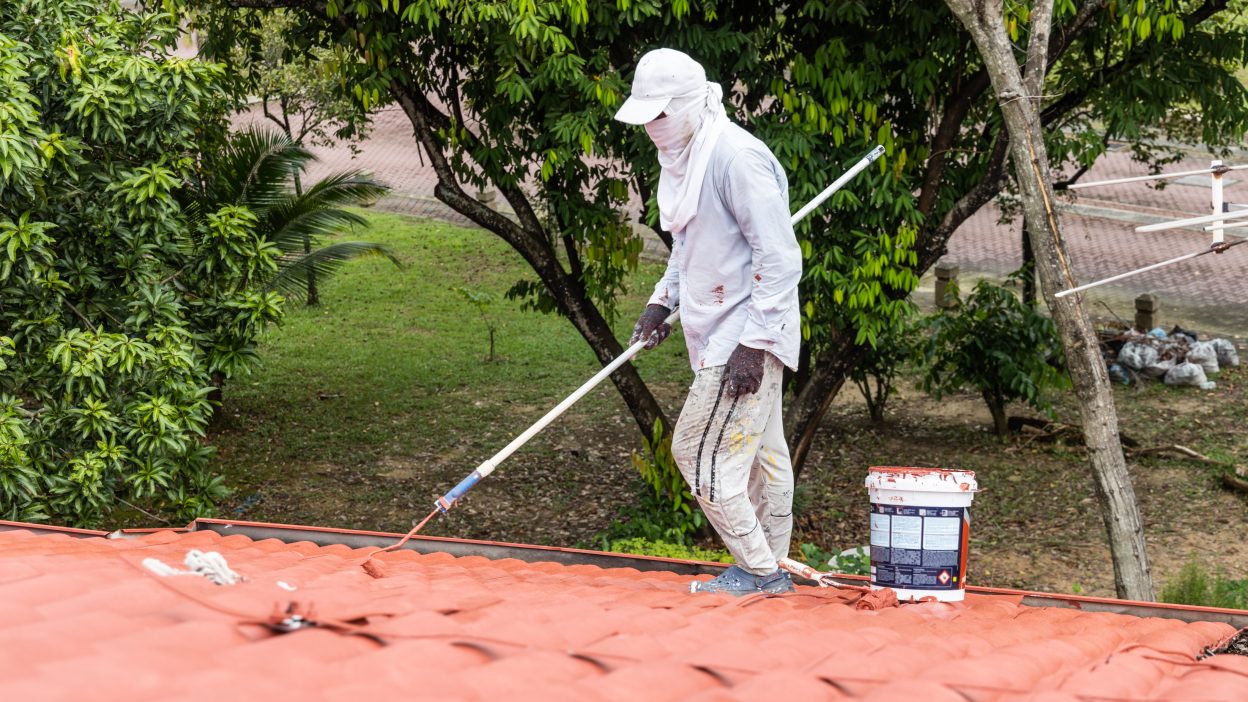
Some waterproofing systems require a primer to improve adhesion between the roof and the coating. - Apply the waterproofing chemical:
The product should be applied according to the manufacturer’s recommended thickness and method. Multiple coats may be required. - Allow proper curing:
The waterproofing layer needs sufficient time to dry or cure before being exposed to rain or heavy use.
Can Waterproofing Chemicals Stop All Roof Leaks?
Waterproofing chemicals can provide excellent protection, but they are not a substitute for repairing serious structural problems.
For example, if a roof has major cracks, damaged concrete, blocked drainage, or serious structural movement, simply applying a coating may only provide a temporary solution. In such cases, the underlying problem should be repaired first.
It is also important to make sure water can drain properly from the roof. Standing water can put continuous pressure on the waterproofing system and eventually cause damage.
How to Choose the Right Chemical for Roof Leakage
When selecting a product, consider the roof’s condition, the type of leakage, local weather, and the expected lifespan of the waterproofing system.
For roofs that experience movement and temperature changes, polyurethane or elastomeric waterproofing coatings can be strong options because of their flexibility. Acrylic coatings may be suitable for certain maintenance applications, while bitumen and cementitious systems can be useful for specific roof and construction conditions.
Always follow the manufacturer’s application instructions and, for significant leakage problems, consider getting an assessment from a professional waterproofing contractor.
Conclusion
Choosing the right chemical for roof leakage can make a major difference in protecting your property from rainwater and moisture damage. Polyurethane, elastomeric, acrylic, bitumen-based, and cementitious waterproofing products each have their own advantages. For many roofs where flexibility and continuous waterproof protection are important, polyurethane and elastomeric coatings are among the most practical choices. However, the best solution ultimately depends on the roof’s condition and the cause of the leakage.
Most importantly, do not treat roof waterproofing as simply applying a chemical over a leaking area. Proper inspection, surface preparation, crack repair, correct application, and regular maintenance are all essential for achieving a durable waterproofing result.