Ask ten roofers which waterproofing membrane is best and you’ll probably get ten slightly different answers. That’s not because they’re confused. It’s because the “best” membrane depends on your roof, your climate, your budget, and how long you plan to stay in the building. Still, some options consistently outperform others, and understanding why can save you thousands of dollars and a lot of headaches.
Let’s walk through what matters, what your choices are, and how to pick the one that suits your situation.
Why Roof Waterproofing Matters More Than You Think
A roof leak rarely announces itself with a dramatic flood. It usually starts small: a faint stain on the ceiling, a musty smell in the corner of a room, paint that bubbles for no obvious reason. By the time you notice, water may have been creeping through insulation and timber for months.
Here’s what unchecked moisture can do:
- Damage the structure. Concrete slabs develop cracks and rust forms on the steel reinforcement inside them. Timber rots. Over time, repairs stop being cosmetic and start being structural.
- Invite mold. Damp spaces breed mold, which affects indoor air quality and can trigger allergies and breathing problems.
- Drive up energy bills. Wet insulation loses much of its ability to insulate, so heating and cooling cost more.
- Lower property value. Buyers and inspectors spot water damage quickly, and it gives them leverage to negotiate the price down.
A good membrane is basically your roof’s raincoat. When it’s chosen and installed well, you stop thinking about the roof for years. When it’s the wrong choice, you think about it constantly.
What Makes a Membrane “Good”?
Before comparing types, it helps to know what you’re looking for. A strong roofing membrane should offer:
- Flexibility. Buildings move. They expand in the heat and contract in the cold. A membrane that can’t stretch will crack.
- UV resistance. Sunlight breaks down many materials. If the membrane will be exposed, it needs to handle years of direct sun.
- Durability. It should withstand foot traffic, hail, debris, and temperature swings.
- Strong seams and bonding. Most leaks happen at joins, edges, and penetrations like vents and pipes, not in the middle of a sheet.
- Reasonable lifespan and cost. The cheapest option up front is often the most expensive over twenty years.
The Main Types of Roof Waterproofing Membranes
1. Liquid-Applied Membranes
These are rolled, brushed, or sprayed on, then cured into a seamless rubbery layer. Common types include polyurethane, acrylic, and silicone.
- Why people like them: No seams means fewer weak points. They’re excellent for roofs with awkward shapes, lots of pipes, or tricky corners, because the liquid flows around everything.
- Downsides: Thickness depends on the installer’s skill. Apply it too thin and you’ve compromised the whole job. Weather during application also matters, since rain or extreme heat can ruin a cure.
- Best for: Complex roof shapes, repairs, balconies, and flat roofs with many details.
2. Bituminous (Modified Bitumen) Membranes
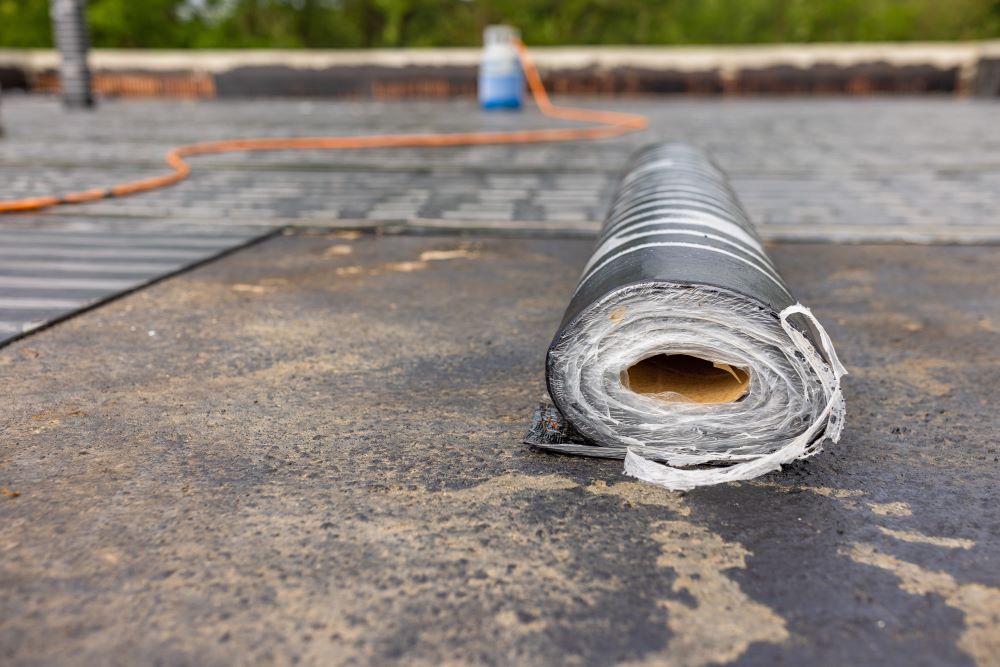
These are sheets made from asphalt blended with polymers such as SBS or APP to boost flexibility and strength. They’ve been used in various forms for decades, so there’s a long track record.
- Why people like them: They’re tough, reliable, and relatively affordable. Multiple layers can be built up for extra protection.
- Downsides: Many are installed with a torch, which brings fire risk and requires trained professionals. Self-adhesive and cold-applied versions exist and are safer, though they can cost a bit more.
- Best for: Low-slope and flat roofs, commercial buildings, and places where toughness matters most.
3. PVC Membranes
Polyvinyl chloride sheets are welded together with hot air, creating seams that are actually stronger than the sheet itself.
- Why people like them: Excellent chemical resistance, strong welded seams, and often a reflective surface that keeps buildings cooler. They hold up well against standing water and grease, which is why you see them on restaurants and industrial buildings.
- Downsides: Higher upfront cost, and they can become less flexible in very cold conditions as plasticizers age.
- Best for: Commercial roofs, buildings with rooftop equipment, and hot climates.
4. TPO Membranes
Thermoplastic polyolefin is a newer, popular single-ply option. Like PVC, seams are heat-welded, and it’s usually white and reflective.
- Why people like them: Good energy efficiency, competitive pricing, and solid performance.
- Downsides: Quality varies between manufacturers because the technology is still maturing. Choosing a reputable brand matters.
- Best for: Commercial and residential flat roofs where energy savings are a priority.
5. EPDM (Rubber) Membranes
EPDM is a synthetic rubber, sold in large sheets. It’s the same kind of material used in many outdoor seals.
- Why people like them: Very long lifespan, excellent weather resistance, flexible in cold climates, and straightforward to repair. Large sheets mean fewer seams on simple roofs.
- Downsides: Seams rely on adhesives or tapes, which need careful installation. The black color absorbs heat, though white versions exist. It can also be punctured more easily than thicker systems.
- Best for: Large, simple flat roofs, especially in colder regions.
6. Cementitious Waterproofing
This is a cement-based coating, often with polymer additives, applied like a thick paint.
- Why people like them: Easy to apply, inexpensive, and bonds well to concrete.
- Downsides: It’s rigid, so it can crack if the structure moves. It’s better for areas with little movement.
- Best for: Small concrete roofs, water tanks, and basements, rather than roofs exposed to big temperature swings.
So, What’s the Best Membrane?
Here’s the honest answer: there’s no single winner, but there are clear favorites for specific situations.
- For complex or irregular roofs: liquid-applied polyurethane, because it’s seamless and conforms to anything.
- For maximum toughness on a flat roof: modified bitumen, especially in a two-layer system.
- For commercial buildings and hot climates: PVC or TPO, thanks to reflectivity and welded seams.
- For long-lasting, low-maintenance simplicity: EPDM on a straightforward roof.
If a homeowner pressed me for one all-round pick for a typical flat residential or small commercial roof, I’d point toward a quality reinforced liquid-applied system or a good modified bitumen system. Both are forgiving of building movement and have strong track records.
Climate Plays a Big Role
Your local weather should steer the decision as much as the product specs do.
- Hot, sunny regions put heavy UV and heat stress on a roof. Reflective membranes like white TPO or PVC, or UV-stable liquid coatings, help reduce heat and prevent premature aging.
- Cold climates demand membranes that stay flexible when temperatures drop. EPDM and modified bitumen handle this well.
- Rainy or humid regions need excellent seam integrity and drainage. Welded single-ply systems or seamless liquid membranes shine here.
Installation Matters as Much as the Product
Here’s something many people learn the hard way: a premium membrane installed badly will fail before a budget membrane installed well. Most failures trace back to poor surface preparation, rushed drying times, thin application, or sloppy detailing around edges and penetrations.
Before you hire anyone, ask:
- Are they certified or approved by the membrane manufacturer?
- Do they offer a written warranty covering both materials and workmanship?
- Will they test the roof for leaks (flood testing, for example) before calling the job done?
- Can they show you similar projects completed a few years ago?
Also make sure the roof surface is properly prepared. Cracks need repair, old loose material should be removed, and drainage should be sorted out so water doesn’t pool.
Don’t Skip Maintenance
Even the best membrane needs a little attention. Inspect your roof at least twice a year and after major storms. Keep drains and gutters clear, remove debris, and watch for blistering, lifting seams, or cracks. Catching a small issue early often costs a fraction of what a full repair does.
Conclusion
Choosing a roof waterproofing membrane isn’t about hunting for a magic product. It’s about matching the material to your roof’s shape, your climate, your budget, and the quality of the people installing it. Liquid-applied systems, modified bitumen, PVC, TPO, and EPDM can all perform beautifully when used in the right place and installed with care.
Spend a little extra time on the decision now. A well-waterproofed roof protects everything beneath it: your belongings, your health, your building, and your peace of mind. And the best time to think about waterproofing is before the first stain appears on the ceiling.


